
.وثيقة صادرة عن بلدية ترينتو بتاريخ 18 تشرين الأول 1943 تُصادق فيها على صورة سيلفيا لوبيك
© CSC Audiovisivi

.وثيقة صادرة عن بلدية ترينتو بتاريخ 18 تشرين الأول 1943 تُصادق فيها على صورة سيلفيا لوبيك
© CSC Audiovisivi

،وثيقة صادرة عن بلدية ترينتو بتاريخ 18 تشرين الأول 1943
.تُصادق فيها على صورة سيلفيا لوبيك
© CSC Audiovisivi

With the emergence of totalitarianism, that had a particularly devastating effect in the border regions, international tensions led to the catastrophe of the Second World War.
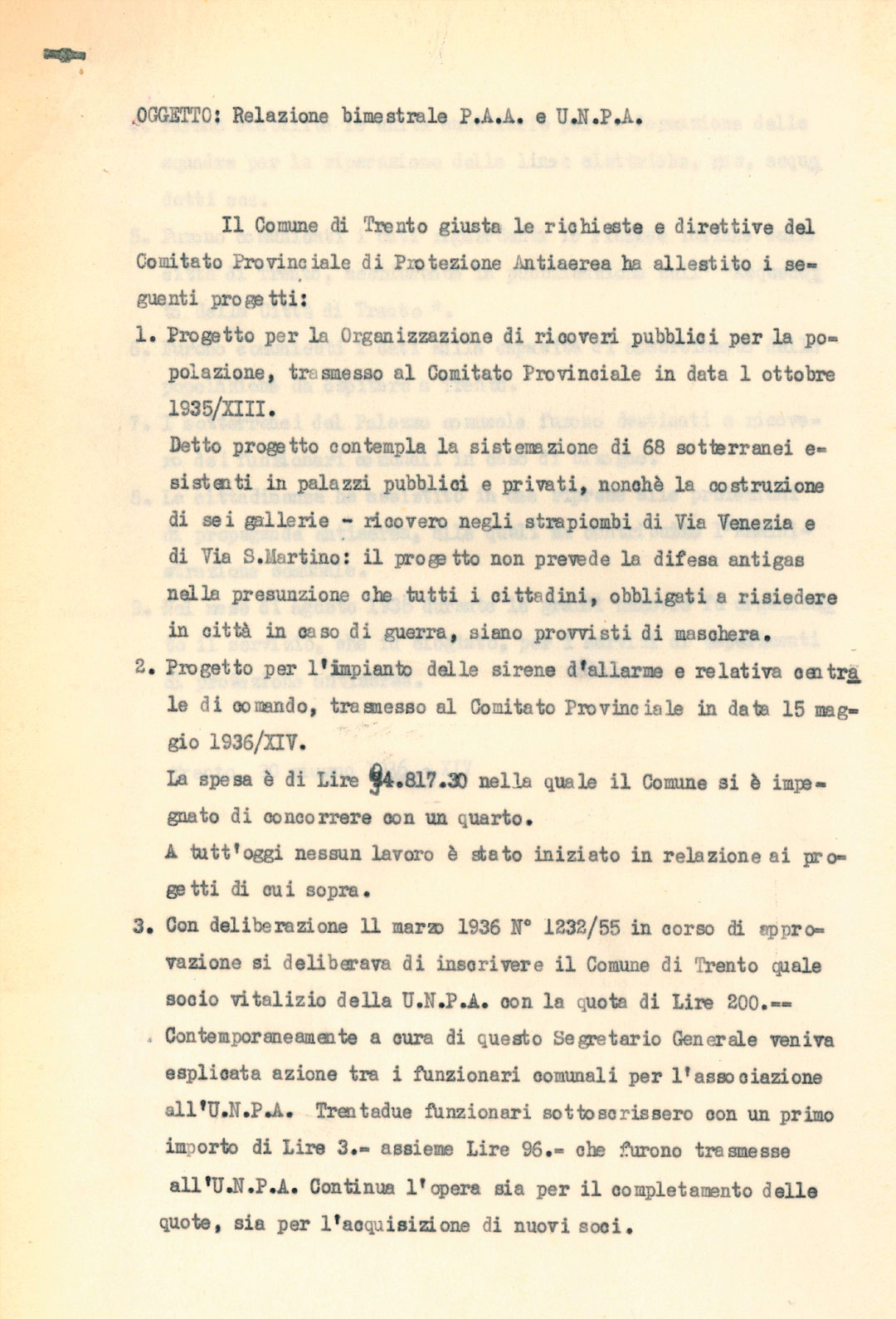
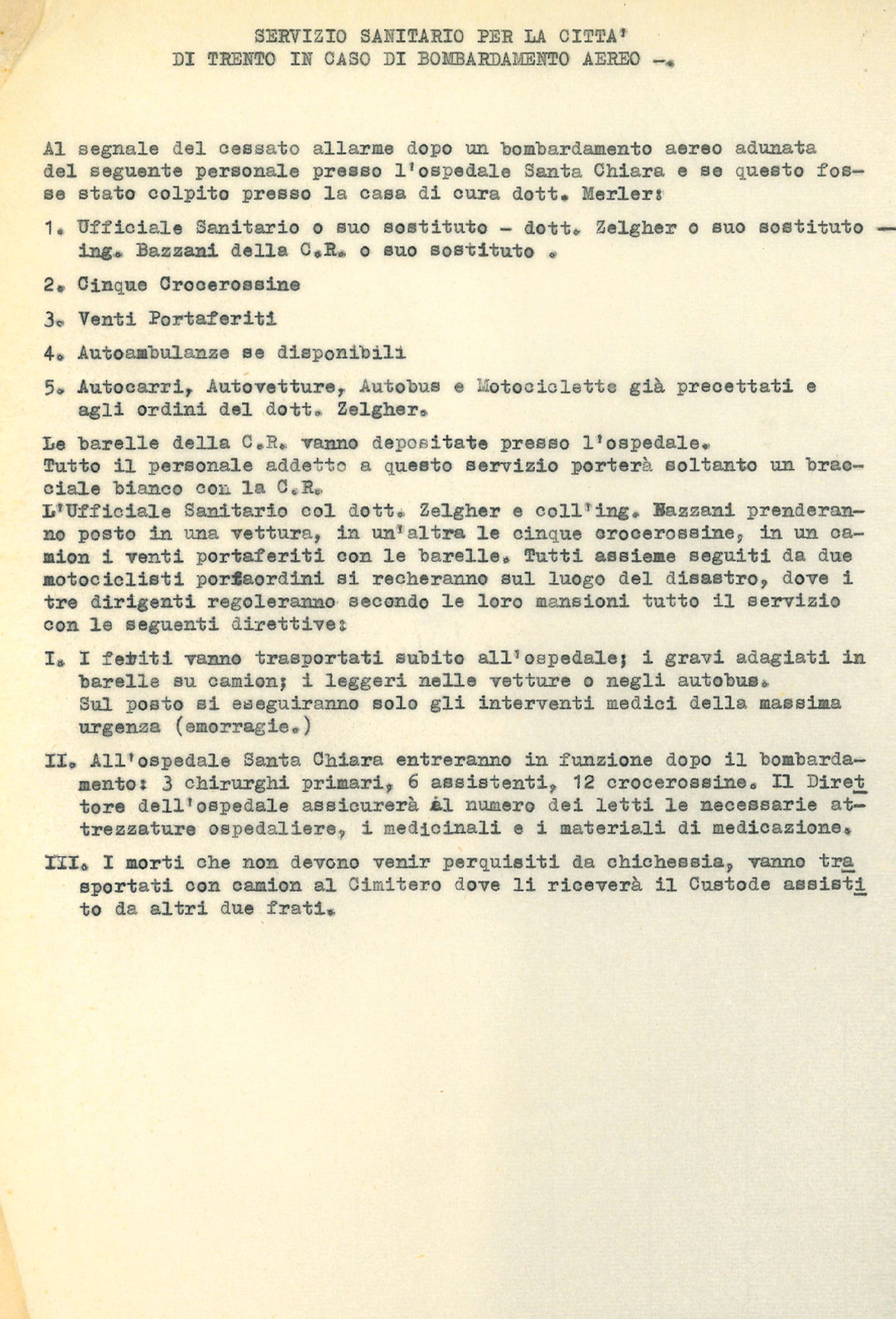
The destruction and disruption caused by bombings on Trent formed the backdrop for a new story. On December 7th, 1943, Silvia gave herself to God forever and chose the name Chiara because she was fascinated by Chiara of Assisi’s radical gospel life.

Watercolour by Lois Irsara (1923-2014) “Study of three red carnations” given by
the artist to Chiara and hung for a long time in the corridor outside her bedroom.
Today it is kept at the Chiara Lubich Centre (Rocca di Papa – Rome).

Detail of the watercolour.
.يُظهر العمل كيارا، عائدة إلى منزلها بعد تكريس ذاتها لله، وقد اشترت ثلاث زهرات قرنفل كعلامة على الاحتفال
CHIARA LUBICH ®
“When the time came for me to take this step – I was then 23 years old – I understood what I was doing, that is, I was leaving everything behind. I had the impression it was as though I were on a bridge and the bridge behind me collapsed; the bridge of the world collapsed. And I remember a tear fell onto my missal. But I did it. And I said to Jesus, «I am all yours.» Then after Mass I went back to the pew and there the immensity of my inner joy cannot be described because I felt, «I have married God, I’ve married God, I’ve married God», and I said: «Anything might happen now! I expect everything; I expect everything because I have married God.»” (Chiara Lubich)
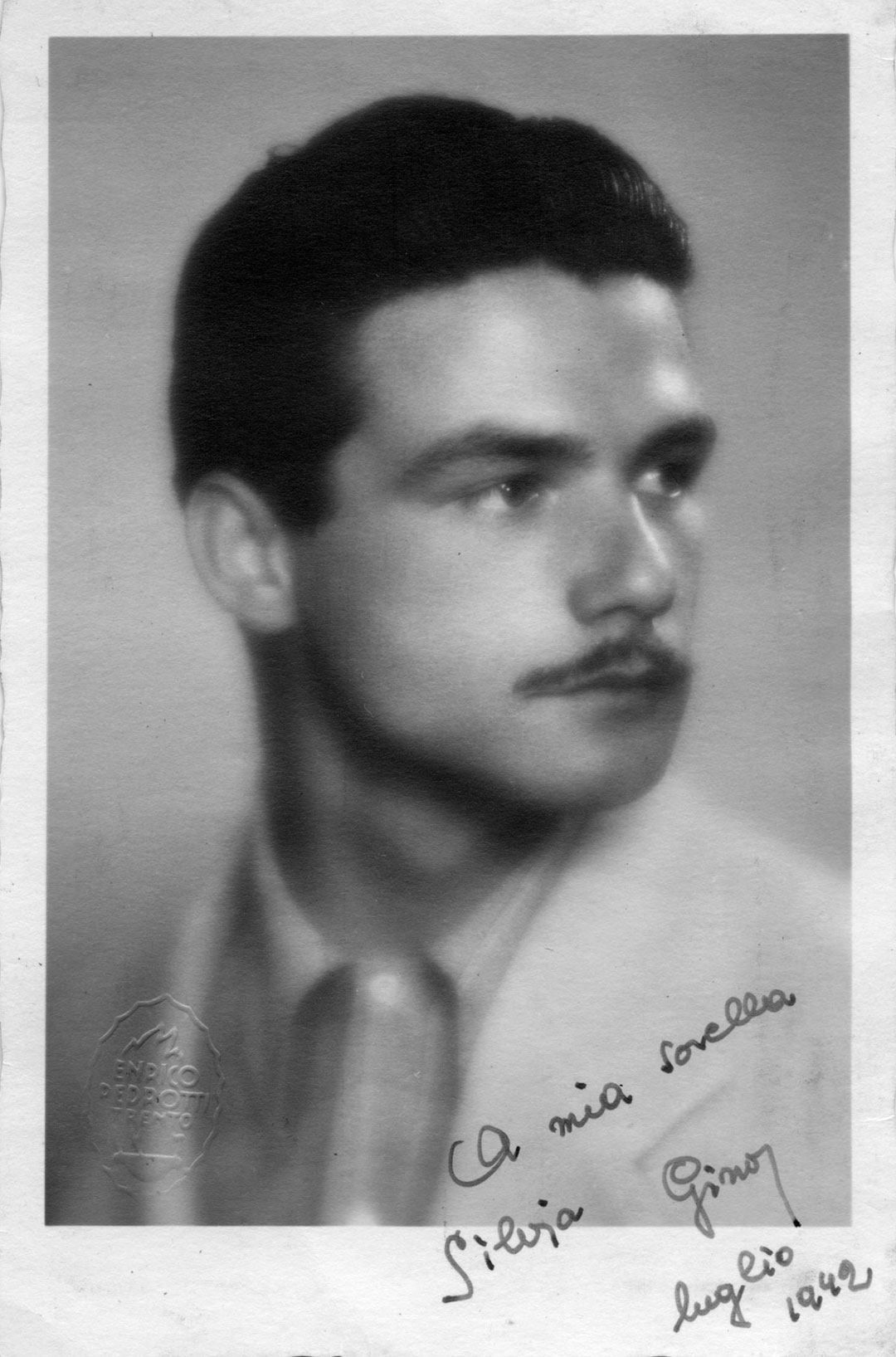
Gino Lubich
Gino Lubich (1918-1993), eldest son of Luigi and Luigia Lubich and Chiara’s brother, was a medical student during the Second World War and participated in the Resistance in communist groups. In July 1944 he was arrested and tortured in Bolzano prison. After the war he worked as a journalist for the newspaper L’Unità and - after leaving the Communist Party in disagreement about what happened in Hungary in 1956 - at the magazine and the publisher Città Nuova.
.فرق الإنقاذ في منطقة بورتيلا، ترينتو
(مؤسسة متحف التاريخ المحلي في ترينتو)
.شارع بريبوسيتورا، ترينتو، 2 أيلول 1943
(مؤسسة متحف التاريخ المحلي في ترينتو)
.شارع بريبوسيتورا، ترينتو، 2 أيلول 1943
(مؤسسة متحف التاريخ المحلي في ترينتو)
San Lorenzo Bridge destroyed by the bombing of 2nd September 1943.
(مؤسسة متحف التاريخ المحلي في ترينتو)
Aerial photographic survey of the bombings on Trent.
(مؤسسة متحف التاريخ المحلي في ترينتو)
Piazza Venezia Refuge, Trent.
(مؤسسة متحف التاريخ المحلي في ترينتو)
Capuchin Friary, 13th May 1944.
(مؤسسة متحف التاريخ المحلي في ترينتو)
Soldiers of the Allied Army leave the former headquarters of the Gestapo in via Brigata Aqui, Trent.
(مؤسسة متحف التاريخ المحلي في ترينتو)
Giannotti Company in charge of removing rubble.
(مؤسسة متحف التاريخ المحلي في ترينتو)


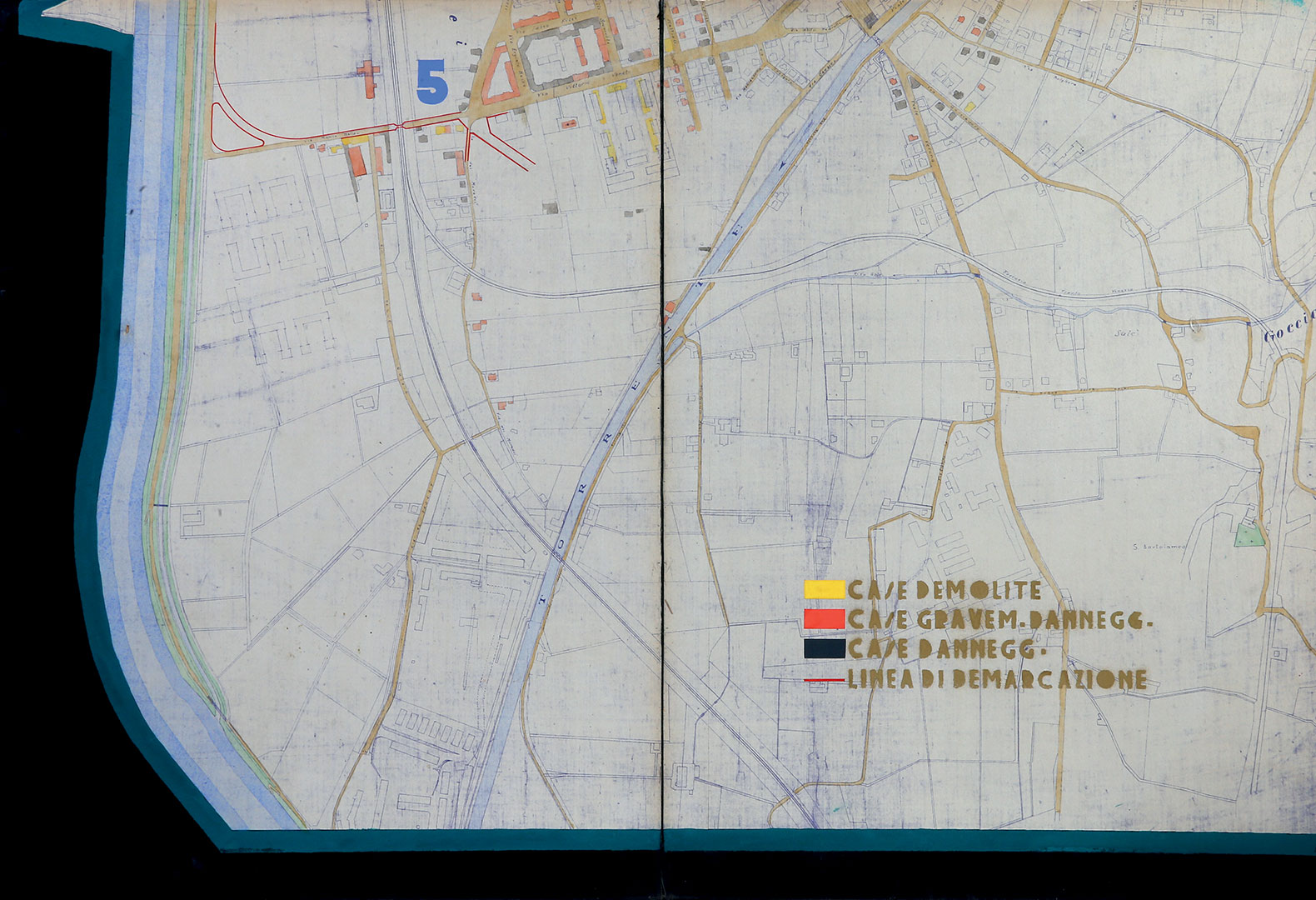
Trent reconstruction plan.
(مؤسسة متحف التاريخ المحلي في ترينتو)



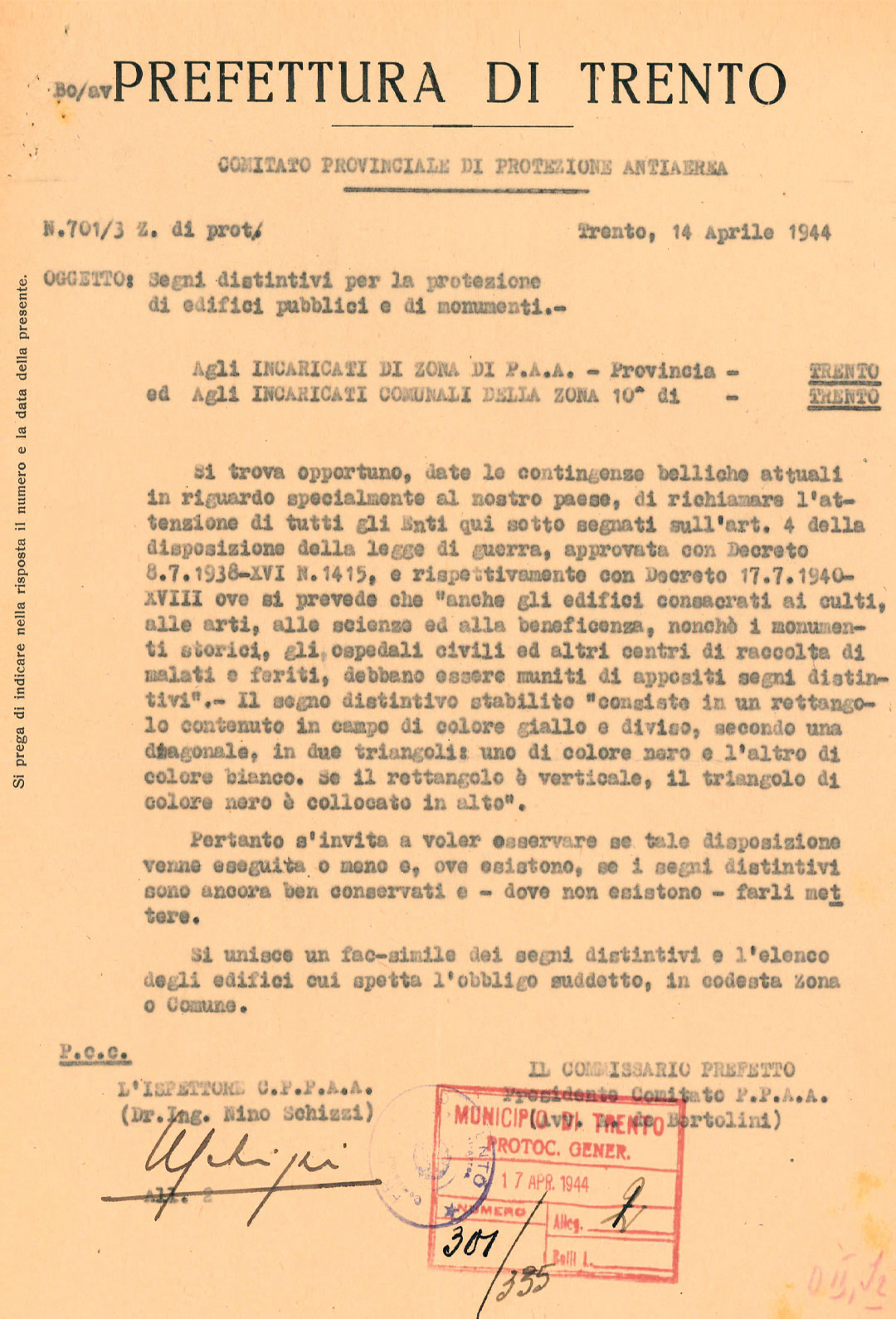


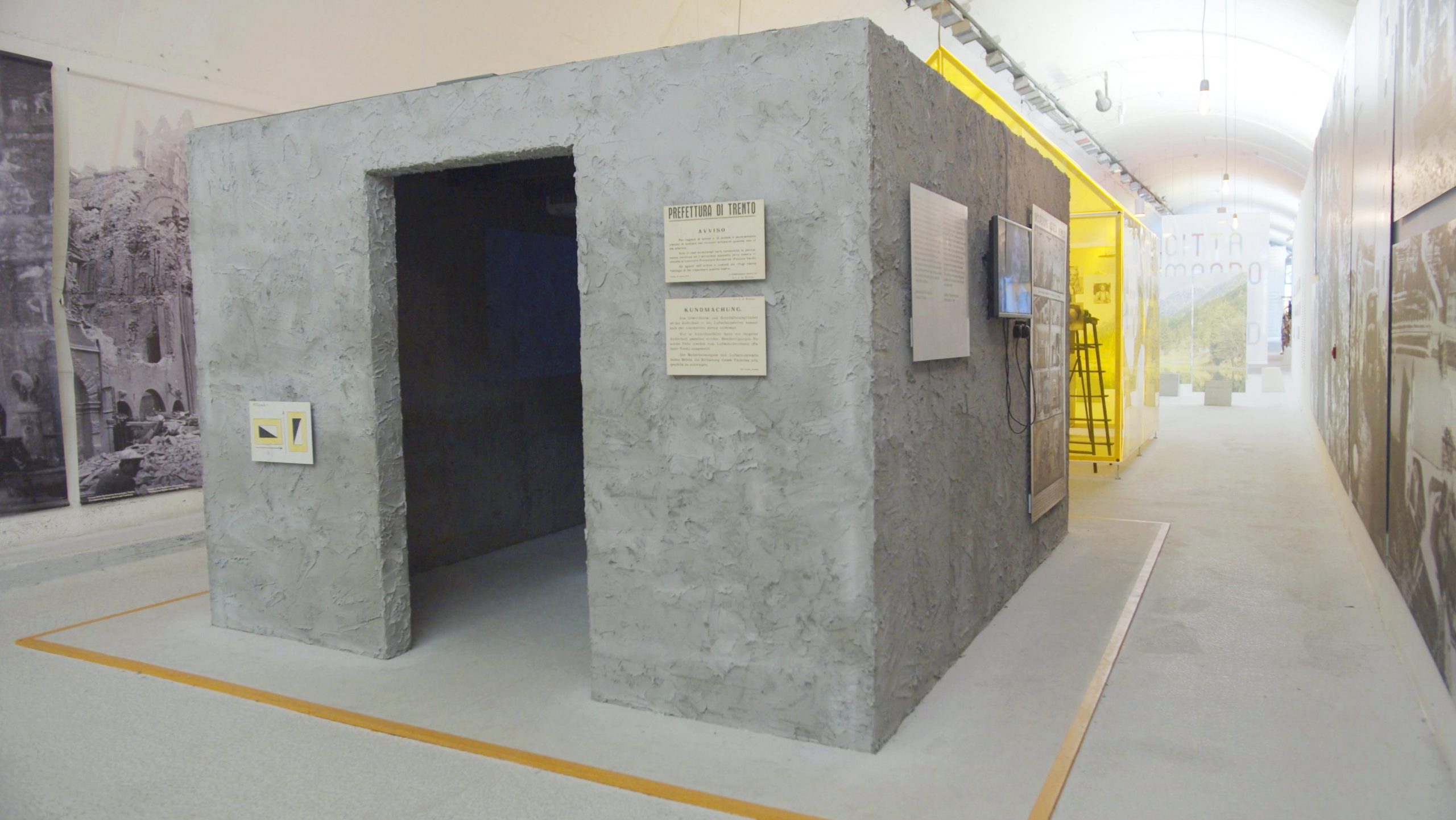
(لحظة صلاة في الملجأ. (مؤسسة متحف التاريخ المحلي في ترينتو
1943 – 1945
Air-raid shelters became ideal meeting places. That group of girls wanted to solve the social problem of the city and so the poorest people, orphans, widows and those most in need became their nearest neighbours.


"الفوكولاري الأول في ساحة الكبوشيين 2 في ترينتو – خاص. تُسمى الجماعات "فوكولاري
.للذكور والإناث على حدٍّ سواء، والّذين هُم في قلب الحركة
The heart of that revolution was a small house: the little flat at 2, Piazza Cappuccini where Chiara and her first companions formed what is universally known today as the first focolare. Looking out over her city from the window of that small flat, Chiara imagined that the Ideal that animated her and her companions would reach the whole of Trent. Soon the community grew, some friends joined the first group of girls and after a few months there were already several hundred people involved; and this new life spread through the valleys of Trentino.
“I went back towards the city to see if my companions were still alive or had been killed in that bombing. I searched and found them all. Someone offered us this little house in Piazza Cappuccini in Trent. We didn't know it then, but in practice it was the first focolare. And there we began to live this spirit that I began to be aware of, to see what we had to do: to live the Gospel, to love. We concentrated above all on love. And that's how we began to live. lt was our happiness. Of course we helped all those affected by the war: the women left without children, and especially the wounded, the sick and the hungry. We were always going round the city to help everyone, and then we went home. The one who gave meaning to our life was precisely the spiritual presence of Christ in our midst.” (Chiara Lubich)

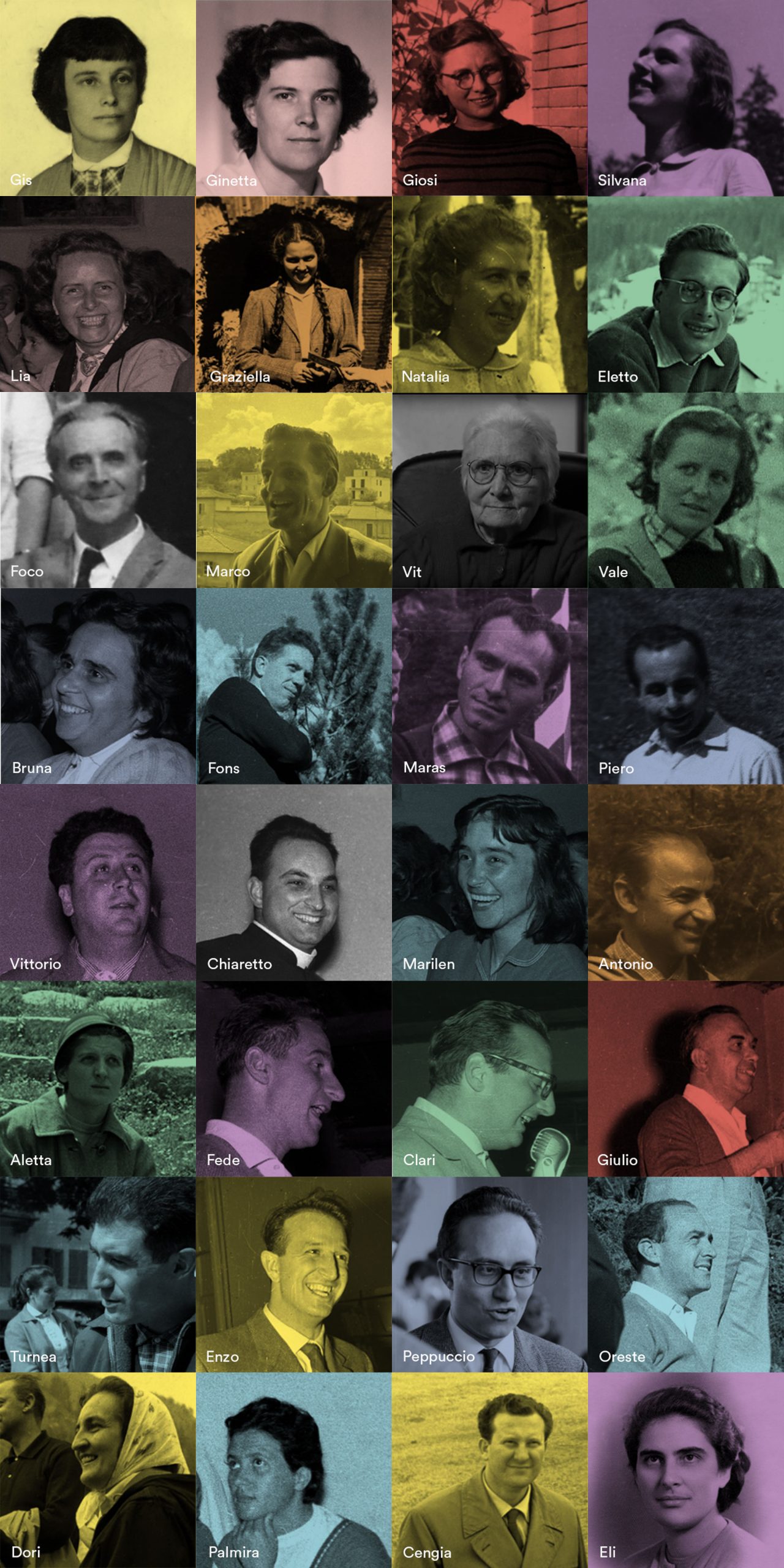
Foco / Chiaretto / Palmira
Igino Giordani, also called Foco (1894 – 1980) was an Italian, writer, journalist and politician. In 1946 he was elected to the Constituent Assembly and in 1948 as a Member of Parliament in the ranks of the Christian Democrat Party. In Parliament he distinguished himself for his commitment to peace and social justice. On 17th September 1948, in Montecitorio, he met Chiara Lubich and from that time on shared the ideals of the Focolare. (Foco)
...in Piazza Cappuccini, you walked straight into the kitchen, then there was a door on the right and one on the left, that’s all. The door on the right led to the room where Chiara slept. We had metal bed frames on the floor and a large picture of Jesus forsaken. On the frames were mattresses with covers that had little colored flowers. It was all clean and well kept. And I said to them, “What? You are living here and you didn’t tell me?” And I said: “I’m not leaving here anymore.” (Palmira)
Graziella / Giosi / Vit / Marco
One day, when I arrived in Piazza Cappuccini with the lunch my mother had prepared, Angelella was there and she said, “Come with me to visit a poor woman I know and bring your lunch”. We went into a room with a bed and an elderly lady was there. Angelella approached this poor woman and hugged her and said to me: “She is Jesus”.
The poor truly were Jesus. (Giosi)
Nearly every day something broke and so, “Marco, this needs fixing. Marco, that needs doing.” I always used to get there at dinnertime and I would hear those girls talking. There was Chiara, Graziella, Giosi, Natalia, Vit and Aletta... I was very impressed by what Chiara said; she spoke about the Gospel, about the Word of Life, about Jesus and Mary. I was very impressed by what she said. I breathed this supernatural atmosphere. (Marco)
Vale / Aletta / Fons


A cura di:

Fondazione Museo storico del Trentino
Via Torre d'Augusto
41 38122 TRENTO - Italy
cf/p.iva 02050480223

Centro Chiara Lubich
Via della Madonnella, 10
00040 Rocca di Papa (RM)
+39 06 947 98 221

Luogo:
Piazza di Piedicastello, 38122 Trento (TN)
Orario:
Dall'8 marzo al 18 maggio 2020: CHIUSO.
Da martedì a domenica, ore 9.00-18.00.
Chiuso il lunedì, il 25 dicembre e il 1° gennaio.
Aperto durante le altre festività, salvo diversa indicazione.
Ingresso libero.
Informazioni:
Referente: Roberta Tait
tel. +39 0461 230482
info@museostorico.it
rtait@museostorico.it
Tel. 0461 230482
Sab., dom.e festivi: 3283807024